Simple Windows tools and practical money guidance to help you prepare for irregular and unexpected expenses, reduce debt, and build a stronger financial foundation — without subscriptions or giving anyone access to your bank accounts.
Private Windows desktop apps. No subscriptions. No bank logins. Your data stays under your control.
How it works
Start with the expenses that don't fit neatly into a monthly budget — insurance, holidays, home and car maintenance, medical costs, travel, gifts, and other irregular expenses.
Some expenses are certain; others are only likely. Set aside manageable amounts over time so a repair, replacement, or unexpected bill doesn't automatically become new debt.
Your Freedom Account organizes one savings balance into individual categories, so you always know what the money is there for and how prepared you are.
The tools
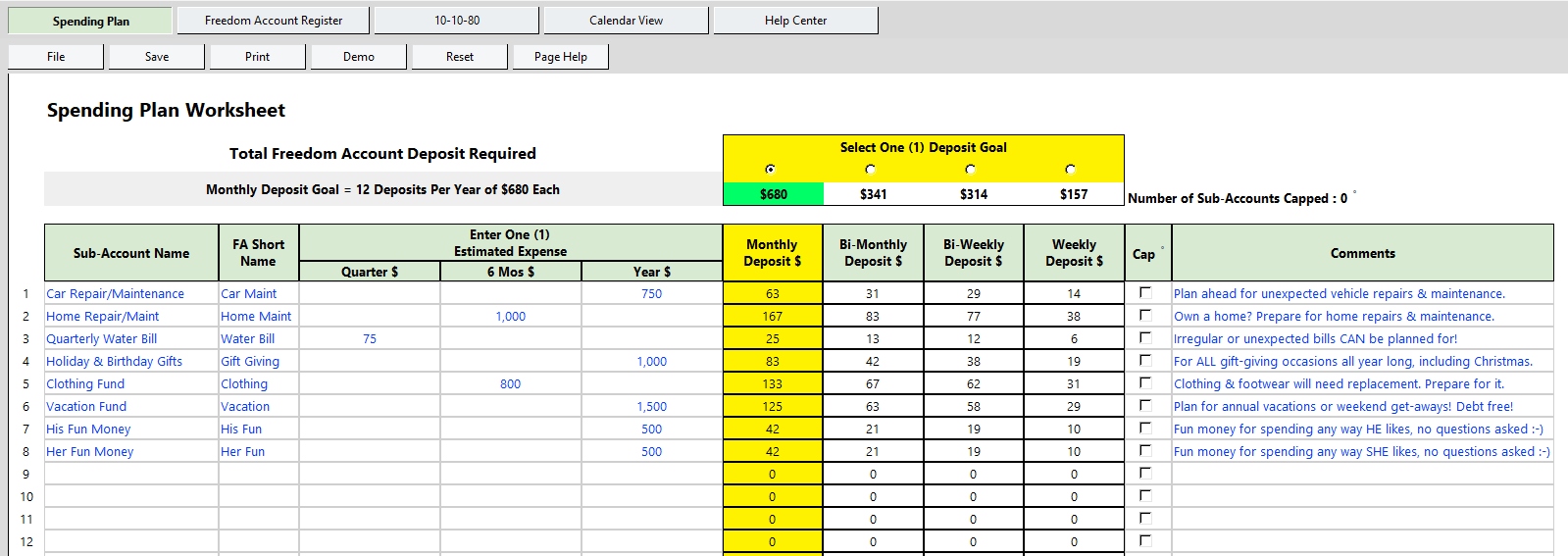
A simple way to prepare for life's irregular and unexpected expenses. Freedom Account helps you set money aside by purpose — car repairs, insurance, medical expenses, holidays, home maintenance, travel, and whatever else life sends your way. A Spending Plan calculates what to save, the Register tracks every transaction, and reports show what you've accumulated for each purpose.
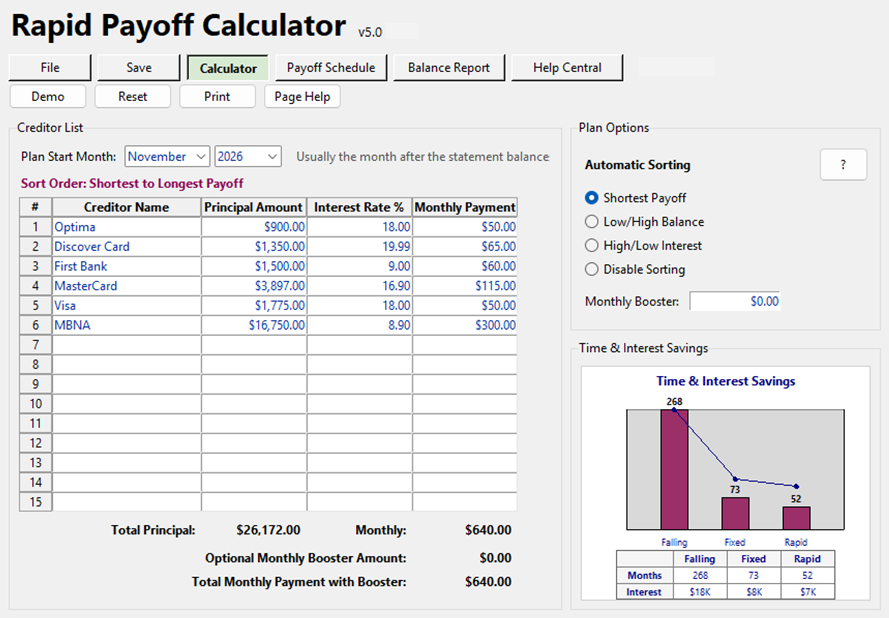
Turn the payments you're already making into a clear plan for becoming debt-free. As one balance reaches zero, its payment is redirected to the next debt instead of disappearing back into monthly spending. An optional Monthly Booster shows how any extra amount changes the picture.
Why planning ahead matters
of American cardholders carry a balance from month to month — and many of those balances started with one unexpected expense.
average interest rate on credit card accounts that carry a balance. Financing an unplanned expense makes it cost noticeably more.
of Americans report having enough savings or access to funds to cover a $1,000 emergency expense. Unexpected expenses are common; being prepared for them is less so.
Sources: Bankrate Credit Card Debt Survey (2026) · Federal Reserve G.19 Consumer Credit · Bankrate Emergency Savings Report (2026)
The wider framework
Everyone's financial starting point is different. You may already have some of these pieces working well while others need attention. PlanAhead Money brings together practical guidance and tools to help you strengthen the areas that need work.
Start where you are. Fill the gaps. Build from there.
The numbers suggest a practical starting order if you are beginning from scratch. You may already have several pieces in place. Start with the gaps in your own financial toolkit and strengthen each area over time. These building blocks work together and do not have to be completed one at a time.
How should I divide my income?
Guide comingHow can I build long-term security?
Guide comingFree tool
See your estimated debt-free date and what an extra $50 or $100 a month really does, or work out an Emergency Fund target from your essential monthly expenses. When you want a saved multi-debt plan with printable schedules, the Rapid Payoff Calculator goes much deeper.
Run my numbers →Free 2-minute quiz
Answer a few questions about the expenses you'd like to prepare for and get an estimated monthly starting point.
Take the quiz →Real-world examples
How a family could fund $4,800 of irregular expenses on $68k. How a couple could clear $23,400 in 28 months. Illustrative examples with realistic numbers; the people are fictional, the calculations are real.
See the examples →From the blog